
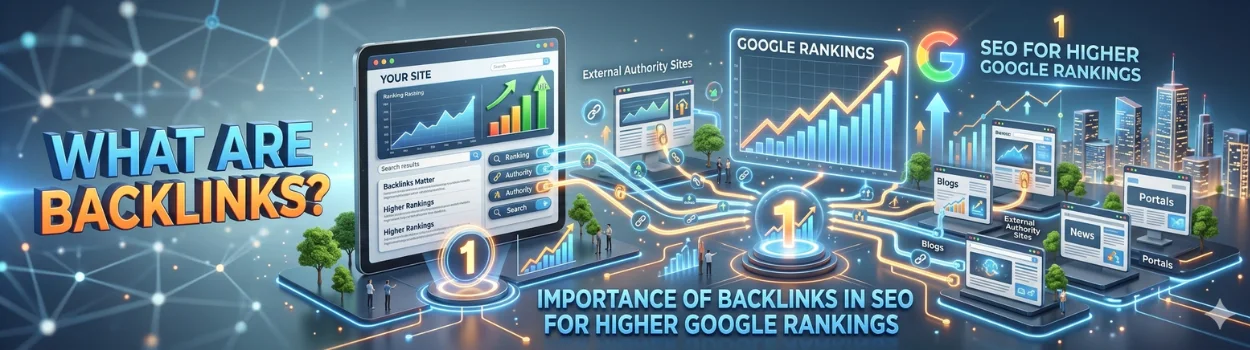
In today’s competitive digital landscape, ranking on Google is not just about creating a website or publishing content. Businesses must build authority, trust, and relevance to appear on the first page of search results. One of the biggest factors that influences search rankings is backlinks.
If you are wondering what are backlinks in SEO and why they matter so much, this guide will help you understand everything in simple terms. You’ll learn the importance of backlinks in SEO, how they improve rankings, and the best strategies to build high-quality backlinks in 2026.
What Are Backlinks in SEO?
Backlinks are links from one website to another website. In simple words, when another website links to your page, that link is called a backlink.
For example:
If a marketing blog links to your business website as a reference, Google considers it a signal that your content is valuable and trustworthy.
Backlinks are also called:
- Inbound links
- Incoming links
- External links
Search engines like Google use backlinks to evaluate the credibility and authority of a website. The more quality backlinks your website has, the better your chances of ranking higher in search results.
Why Are Backlinks Important for SEO?
The importance of backlinks in SEO cannot be ignored because backlinks act like votes of confidence for your website.
When reputable websites link to your content, Google assumes your website provides useful information. This improves your website authority and helps your pages rank higher.
Here are the main reasons why backlinks are important for SEO.
Backlinks Improve Google Rankings
Google considers backlinks one of its top ranking factors. Websites with strong backlink profiles usually rank better than websites with weak or no backlinks.
For competitive keywords, backlinks often make the difference between ranking on page one and getting buried deep in search results.
For example:
A blog with 100 quality backlinks from trusted websites will generally rank higher than a similar blog with only a few backlinks.
This is why businesses invest heavily in SEO link-building strategies.
Backlinks Increase Website Authority
Backlinks help build your website’s domain authority and trustworthiness.
When high-authority websites link to your content, search engines see your website as more reliable.
Benefits include:
- Higher trust signals
- Better search engine visibility
- Improved keyword rankings
- Stronger online credibility
Quality backlinks from industry-relevant websites are especially valuable for long-term SEO growth.
Backlinks Drive Referral Traffic
Backlinks are not only useful for SEO rankings. They also bring direct visitors to your website.
For example:
If your business is mentioned on a popular blog or news website, readers may click the link and visit your site.
This referral traffic can:
- Increase brand awareness
- Generate leads
- Improve engagement
- Boost conversions
High-quality backlinks can therefore help both SEO and business growth.
Faster Indexing by Search Engines
Search engines discover new pages through links.
When your website receives backlinks from indexed websites, Google crawlers can find and index your pages faster.
This is particularly useful for:
- New websites
- Newly published blog posts
- E-commerce product pages
- Service pages
Without backlinks, indexing may take longer.
Types of Backlinks in SEO
Not all backlinks are equal. Some backlinks help rankings, while others may harm your SEO performance.
Understanding backlink types is essential for building a strong SEO strategy.
DoFollow Backlinks
DoFollow backlinks pass SEO authority from one website to another.
These backlinks directly contribute to:
- Higher rankings
- Better authority
- Improved SEO performance
Most SEO experts focus on acquiring high-quality DoFollow backlinks.
NoFollow Backlinks
NoFollow backlinks contain a tag that tells search engines not to pass authority.
Although they may not directly improve rankings, they still provide benefits such as:
- Referral traffic
- Brand exposure
- Natural backlink diversity
A healthy backlink profile should include both DoFollow and NoFollow links.
High-Quality Backlinks
High-quality backlinks come from:
- Trusted websites
- Relevant industry blogs
- News websites
- Educational domains
- High-authority platforms
Characteristics of good backlinks:
- Relevant content
- Natural placement
- Genuine editorial mention
- Strong website authority
These backlinks have the biggest SEO impact.
Low-Quality or Spam Backlinks
Spam backlinks can damage your website rankings.
Examples include:
- Paid spam links
- Private Blog Networks (PBNs)
- Irrelevant directories
- Low-quality forum spam
Google may penalize websites using manipulative backlink techniques.
That is why quality matters more than quantity in modern SEO.
How Google Evaluates Backlinks
Relevance
Links from websites related to your industry carry more value.
For example:
A backlink from a digital marketing blog is more valuable for an SEO agency than a random unrelated website.
Authority
Backlinks from high-authority websites have greater ranking power.
Trusted websites usually include:
- News platforms
- Established blogs
- Government sites
- Educational institutions
Anchor Text
Anchor text is the clickable text used in a hyperlink.
Optimized anchor text helps Google understand the linked page topic.
Example:
“Importance of backlinks in SEO”
However, excessive keyword stuffing in anchor text can look unnatural.
Link Placement
Links placed naturally inside quality content are more effective than links hidden in footers or sidebars.
Editorial backlinks usually provide the best SEO value.
Benefits of Backlinks for Businesses
Backlinks are not only about rankings. They directly impact business growth.
Key benefits include:
- Higher organic traffic
- Better online visibility
- Increased leads and enquiries
- Stronger brand authority
- Competitive advantage
For local businesses, backlinks can improve visibility in Google search and local SEO results.
How to Build High-Quality Backlinks
Building backlinks requires consistent effort and valuable content.
Here are some effective backlink-building strategies.
Guest Posting
Write articles for industry-related websites and include links to your website.
Guest blogging helps:
- Build authority
- Reach new audiences
Gain relevant backlinks
Create Valuable Content
High-quality content naturally attracts backlinks.
Examples:
- Research-based blogs
- Case studies
- Infographics
- Industry reports
- Guides and tutorials
Content marketing remains one of the best SEO link-building techniques.
Business Directories
Listing your business on trusted directories can help generate backlinks.
Focus on:
- Relevant industry directories
- Local business listings
- Professional association websites
Avoid spammy directories.
PR and Media Mentions
Getting featured in:
- News websites
- Online magazines
- Industry publications
can generate powerful authority backlinks.
Digital PR has become an important SEO strategy in 2026.
Common Backlink Mistakes to Avoid
Many websites make SEO mistakes while building backlinks.
Avoid these practices:
- Buying spam backlinks
- Using automated link-building tools
- Excessive keyword-rich anchor text
- Building links from irrelevant websites
- Ignoring toxic backlinks
Google’s algorithms are smarter than ever and can detect manipulative link schemes.
Backlinks vs Internal Links
Many people confuse backlinks with internal links.
Backlinks:
- Come from external websites
- Improve authority and rankings
Internal links:
- Connect pages within your own website
- Improve navigation and crawling
Both are important for a complete SEO strategy.
Do Backlinks Still Matter in 2026?
Yes, backlinks remain one of the strongest Google ranking factors in 2026.
However, Google now focuses more on:
- Content quality
- Relevance
- EEAT (Experience, Expertise, Authority, Trustworthiness)
- Natural link-building patterns
Modern SEO is no longer about getting thousands of links. It is about earning trusted and relevant backlinks.
Best Tools to Check Backlinks
Several SEO tools help analyze backlinks.
Popular backlink analysis tools:
- Ahrefs
- SEMrush
- Google Search Console
- Moz Link Explorer
These tools help monitor:
- Referring domains
- Toxic links
- Anchor text
- Competitor backlinks
Regular backlink audits are important for maintaining SEO health.
Conclusion
Understanding what are backlinks and the importance of backlinks in SEO is essential for every business aiming to grow online.
Backlinks help:
- Improve Google rankings
- Increase website authority
- Drive organic traffic
- Build brand trust
- Generate more leads
However, successful SEO today depends on quality rather than quantity. Building natural, relevant, and authoritative backlinks should always be your priority.
If your business wants long-term SEO success, investing in high-quality content and ethical link-building strategies is the best approach for sustainable growth in 2026.

