
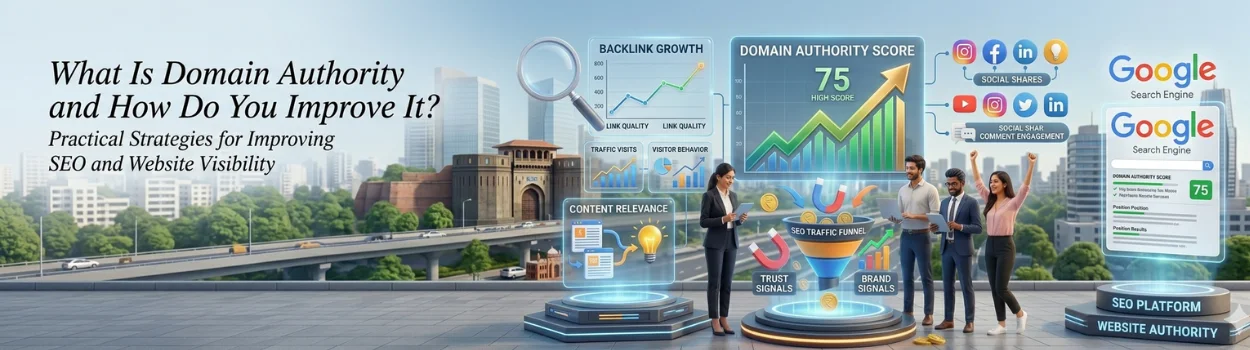
If your website isn’t ranking on Google, getting leads, or generating consistent business — chances are you’ve already heard someone mention Domain Authority or DA.
But here’s the real question:
What Is Domain Authority, and why does it matter so much for your business growth?
Many small business owners invest in websites, SEO, and content marketing but still struggle to appear on the first page of Google. Competitors keep outranking them, traffic stays low, and conversions don’t improve.
The reason often comes down to one thing: your website’s authority in Google’s eyes.
In this guide, you’ll learn:
- What Domain Authority really means
- Why it affects rankings and online visibility
- How to improve your DA score strategically
- Common mistakes hurting your
- SEO growth
- Actionable tips to increase website authority faster
Whether you run a startup, local business, or growing company, this guide will help you understand how stronger SEO authority can lead to more traffic, leads, and revenue.
What Is Domain Authority?
Domain Authority (DA) is a search engine ranking score developed by Moz that predicts how likely a website is to rank on Google search results.
The score ranges from 1 to 100.
- A higher Domain Authority generally means a stronger website reputation.
- Websites with higher DA usually rank more easily for competitive keywords.
- New websites often start with low DA scores.
For example:
- A new business website may have a DA of 5–10
- A growing company website may reach 30–50
- Large brands like Forbes or HubSpot often have DA scores above 80
The important thing to understand is:
Domain Authority is not a direct Google ranking factor.
However, it strongly reflects the overall SEO strength of your website.
Why Does Domain Authority Matter for SEO?
Imagine two businesses offering the same service:
- One website has strong backlinks, optimized content, and trusted authority.
- The other has weak content and almost no backlinks.
Which one will Google trust more?
Obviously, the stronger website.
That’s where DA becomes important.
A higher Domain Authority helps your website:
- Rank faster for competitive keywords
- Build trust with search engines
- Increase organic traffic
- Improve lead generation
- Compete with bigger businesses online
- Strengthen long-term SEO performance
For small businesses, improving Domain Authority can be the difference between:
❌ Being invisible online
✅ Becoming a trusted brand customers discover daily
How Is Domain Authority Calculated?
Several factors influence your Domain Authority score.
1. Quality Backlinks
Backlinks are links from other websites pointing to your site.
But not all backlinks are equal.
A single backlink from a trusted, high-authority website is far more valuable than hundreds of spammy links.
Strong backlinks usually come from:
- Industry blogs
- News websites
- Business directories
- Guest posting websites
- High-authority publications
2. Website Content Quality
Google values websites that consistently publish useful, relevant, and trustworthy content.
If your content solves real user problems, your authority naturally grows over time.
This includes:
- SEO blogs
- Service pages
- Case studies
- Guides
- FAQs
- Industry insights
3. Technical SEO Performance
A slow, broken, or poorly optimized website damages user experience and SEO authority.
Technical SEO includes:
- Website speed
- Mobile responsiveness
- HTTPS security
- Internal linking
- Crawlability
- Clean website structure
4. Website Age and Trust
Older domains with consistent SEO history often carry more trust than brand-new websites.
However, even new businesses can build strong Domain Authority quickly with the right strategy.
What Is a Good Domain Authority Score?
Many business owners obsess over numbers.
But the truth is:
A “good” DA depends on your industry and competitors.
Here’s a general benchmark:
| DA Score | Meaning |
|---|---|
| 1–10 | New website |
| 10–20 | Growing website |
| 20–40 | Strong local business |
| 40–60 | Established authority |
| 60+ | Highly authoritative website |
Instead of comparing yourself to global brands, compare your Domain Authority with direct competitors in your niche.
How Do You Improve Domain Authority?
Now comes the most important part.
If your website has low traffic, weak rankings, or poor visibility, here are the best ways to improve Domain Authority effectively.
1. Create High-Quality SEO Content
Content is the foundation of SEO authority.
Publishing valuable blogs regularly helps you:
- Rank for keywords
- Attract backlinks
- Build trust
- Increase website traffic
Focus on:
- Problem-solving blogs
- Industry guides
- FAQs
- Case studies
- Local SEO topics
Helpful content builds long-term authority.
2. Build Strong Backlinks
Backlinks remain one of the strongest ranking signals.
Focus on getting links from:
- Relevant websites
- Local business directories
- Guest blogging websites
- Industry portals
- News mentions
Avoid:
- Spammy backlinks
- Cheap SEO packages
- Automated link-building tools
Low-quality backlinks can damage your SEO.
3. Improve Website Speed
Nobody likes a slow website — not users and not Google.
A faster website improves:
- User experience
- Engagement
- SEO performance
- Conversion rates
You can improve speed by:
- Compressing images
- Using fast hosting
- Optimizing code
- Reducing unnecessary plugins
4. Optimize Internal Linking
Internal links help Google understand your website structure.
They also pass authority between pages.
For example:
- Link blogs to service pages
- Link related articles together
- Use proper anchor text naturally
This strengthens your overall SEO structure.
5. Fix Technical SEO Problems
Many business websites lose rankings because of hidden technical issues.
Common problems include:
- Broken links
- Duplicate content
- Missing meta tags
- Poor mobile design
- Crawl errors
A proper SEO audit can identify these issues quickly.
6. Focus on User Experience
Google rewards websites that users enjoy visiting.
Improve:
- Navigation
- Design
- Readability
- Mobile responsiveness
- Content formatting
Simple improvements can increase engagement and reduce bounce rates.
Common Mistakes That Hurt Domain Authority
Many businesses unknowingly damage their SEO performance.
Avoid these mistakes:
- Buying Low-Quality Backlinks:- Cheap backlinks often do more harm than good.
- Ignoring Content Marketing:- Without fresh content, authority growth slows down.
- Keyword Stuffing:– Overusing keywords looks unnatural and spammy.
- Poor Website Structure:- Confusing navigation affects both users and rankings.
- Ignoring Technical SEO:- Technical problems can silently hurt SEO performance for months.
Why Small Businesses Should Care About Domain Authority
If you’re a startup or local business owner, stronger DA can help you compete with bigger brands online.
A higher Domain Authority means:
- Better Google rankings
- More organic traffic
- Increased credibility
- More inquiries and leads
- Lower dependency on paid advertising
Instead of chasing short-term marketing hacks, focus on building long-term authority.
That’s how sustainable SEO growth happens.
Final Thoughts
Understanding What Is Domain Authority is important if you want your business website to grow online.
A strong Domain Authority helps improve:
- Visibility
- Search rankings
- Website trust
- Organic traffic
- Lead generation
But remember — improving DA is not about shortcuts.
It’s about:
- Publishing quality content
- Building trusted backlinks
- Improving technical SEO
- Creating a better user experience
When all these elements work together, your website becomes stronger in Google’s eyes.

