
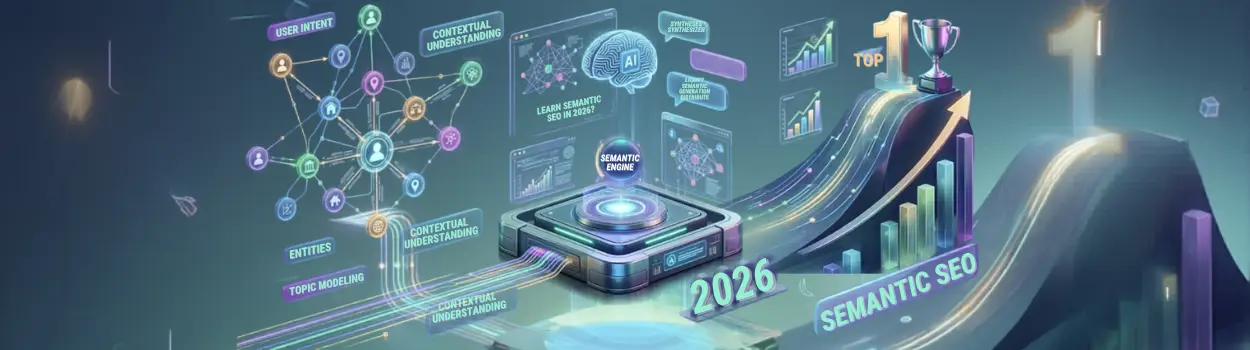
The Semantic SEO Meaning
To truly understand the semantic seo meaning, you must look at how modern algorithms process data. Semantic SEO is the strategic process of building deep, topical meaning into your website’s content so that artificial intelligence and search engines can fully understand the context, relationships, and entities behind your business offerings.
Instead of trying to rank for a single phrase, Semantic SEO optimizes for broad topics and user intent. A robust Semantic SEO framework answers the user’s primary question, anticipates their follow-up questions, and structures this data in a way that AI models (like Google Gemini) can easily extract and cite. When you leverage ai semantic seo, you transform your website from a collection of isolated web pages into a definitive, interconnected knowledge graph.
The Paradigm Shift: LSI vs Entities in Semantic SEO
Historically, marketers relied on Latent Semantic Indexing (LSI) keywords. This meant sprinkling synonyms and related terms throughout a page to trick the search engine into recognizing the topic. In a modern Semantic SEO ecosystem, the debate of LSI vs entities is over: entities have won.
An entity is a distinct, well-defined concept, organization, person, or product recognized by the search engine’s Knowledge Graph.
Legacy Strategy: Stuffing the phrase “industrial pump supplier” 20 times.
Modern Semantic SEO Strategy: Defining the entity of “industrial pumps” by covering related entities such as “fluid dynamics,” “cavitation prevention,” “ISO 9001 compliance,” and “impeller tolerances.”
By optimizing for entities rather than just strings of text, Semantic SEO proves your absolute subject matter expertise to the algorithm, establishing the brand authority necessary for high-value B2B lead generation.
Architecting Authority: Topical Clusters and NLP Optimization
A successful semantic seo strategy cannot exist on a single landing page. It requires the creation of extensive topical clusters.
In Semantic SEO, a topical cluster involves creating a broad “Pillar Page” (e.g., “The Ultimate Guide to Aerospace Machining”) supported by dozens of highly specific sub-topic pages (e.g., “Titanium Tolerance Standards in Aerospace”). This comprehensive coverage signals to search engines that you are not just targeting a keyword, but that you own the entire topical landscape.
Furthermore, this content must undergo rigorous Natural Language Processing (NLP) optimization. Advanced ai semantic seo dictates that content is written with clear syntax, concise definitions, and distinct formatting (like tables and bullet points) so that machine learning algorithms can parse and understand the exact relationship between the words on your page.
The Connective Tissue: The Internal Linking Model
You can write the most authoritative content in your industry, but if it is not connected properly, your Semantic SEO efforts will fail to generate ROI. The unsung hero of website optimization is the internal linking model.
A strategic internal linking model acts as the roadmap for both AI crawlers and human buyers. By seamlessly linking your supporting cluster pages back to your main pillar pages using exact-match descriptive anchor text, you funnel “PageRank” and contextual relevance throughout your digital ecosystem. In the context of Semantic SEO, this internal linking model guides a procurement manager from an educational blog post directly to a conversion-optimized Request for Quote (RFQ) page, directly driving customer acquisition.

Executing the Vision: Semantic SEO Tools and ROI
Executing this level of technical architecture requires an elite semantic seo strategy backed by enterprise-grade semantic seo tools. We utilize advanced semantic seo tools to analyze competitor content gaps, map entity relationships, and optimize your site’s Schema markup.
However, Semantic SEO does not exist in a vacuum. A results-driven digital marketing strategy integrates this organic dominance with aggressive paid advertising and performance marketing. By using Semantic SEO to build long-term equity and lower your Customer Acquisition Cost (CPA), and utilizing paid ads to capture immediate pipeline velocity, you create a mathematically sound, self-sustaining revenue engine.
Engineer Your Market Dominance
In the generative AI search era, the businesses that provide the most comprehensive, structured, and entity-driven information will win the market. Semantic SEO is no longer a tactical experiment; it is the foundational requirement for digital business growth.
At Niranjan Enterprises Digital Solutions (NEDS), we specialize in advanced Semantic SEO and holistic website optimization. We architect digital assets that AI algorithms trust and high-value B2B buyers rely on.
Are you ready to transition from chasing keywords to dominating entire industry topics? Let’s schedule a strategic consultation to discuss how NEDS can implement a custom Semantic SEO strategy for your global enterprise.
Frequently Asked Questions
1. What is the fundamental goal of Semantic SEO?
The core goal of Semantic SEO is to optimize for meaning and topical depth rather than isolated keywords, ensuring search engines view your website as the definitive, comprehensive authority on your industry.
2. How does a semantic seo strategy improve lead generation?
By answering complex, multi-layered questions, a semantic seo strategy captures high-intent buyers who are deep in the research phase, bringing highly qualified, educated traffic directly to your conversion funnels.
3. What is the difference between LSI keywords and entities in Semantic SEO?
LSI focuses on finding statistically related words to sprinkle into text. In Semantic SEO, entities focus on defining distinct concepts, facts, and relationships that search engines natively understand and map in their Knowledge Graph.
4. How do topical clusters fit into Semantic SEO?
Topical clusters are the structural blueprint of Semantic SEO. By grouping a main pillar page with interconnected sub-topic pages, you prove exhaustive subject matter expertise, drastically improving your overall online visibility.
5. Why is NLP optimization important for ai semantic seo?
Natural Language Processing (NLP) optimization ensures your text is written in a way that AI models can easily read, parse, and extract facts from, which is critical for appearing in AI Overviews and “zero-click” search results.
6. What role does the internal linking model play in Semantic SEO?
The internal linking model passes contextual relevance and authority between your pages. In Semantic SEO, it tells the search engine exactly how your different entities and topics relate to one another, solidifying your website’s architecture.
7. Do we need specialized semantic seo tools to succeed?
Yes. Modern semantic seo tools use machine learning to identify entity gaps, analyze NLP sentiment, and structure Schema markup, tasks that are nearly impossible to execute manually at an enterprise scale.
8. Can Semantic SEO replace our paid advertising campaigns?
No, they work together. Semantic SEO builds long-term organic ROI and lowers customer acquisition costs over time, while paid advertising provides immediate pipeline velocity and data testing.
9. How long does it take for Semantic SEO to show measurable business growth?
Because Semantic SEO requires building comprehensive topical clusters and deep website optimization, it typically takes 4 to 6 months to see a significant, compounding increase in brand authority and inbound RFQs.
10. How can NEDS help us implement a Semantic SEO framework?
NEDS provides an executive-level digital audit. We map out your industry’s entity relationships, restructure your internal linking model, and deploy a comprehensive semantic seo strategy that integrates seamlessly with your overall performance marketing goals.