
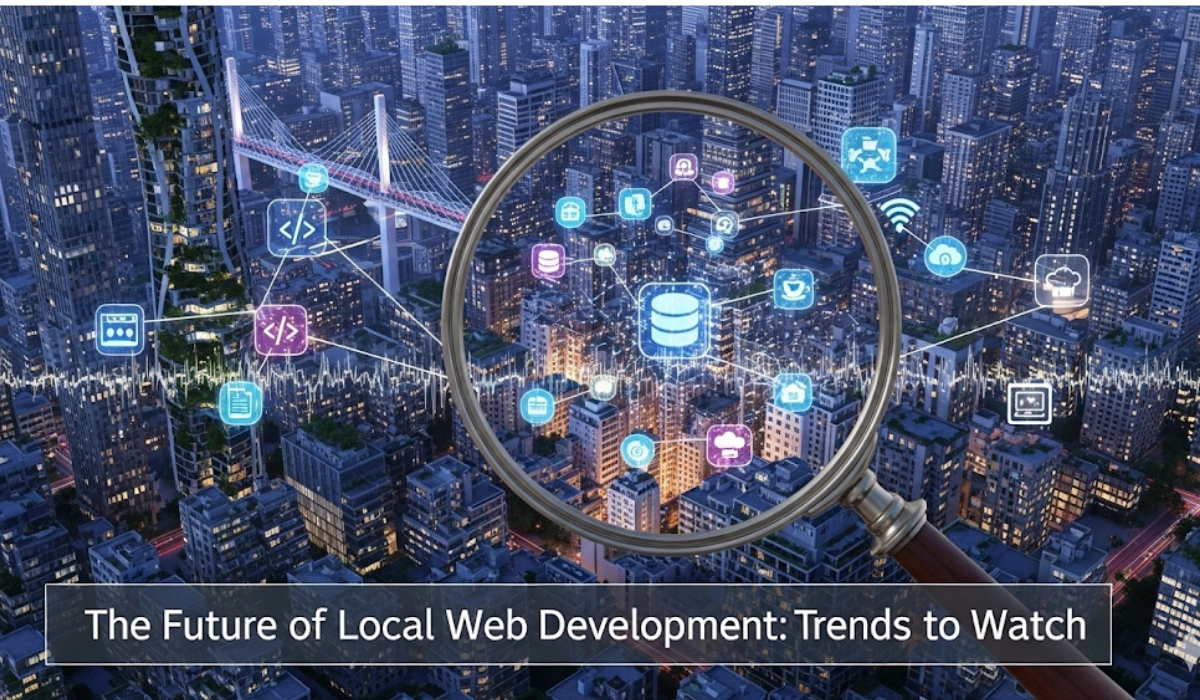
In today’s fast-paced digital world, businesses are realizing that their websites are no longer just an online presence—they are the backbone of their brand. This is where Local Web Development takes center stage. With increasing competition and shifting customer expectations, the ability of local developers to deliver high-performing, accessible, and sustainable websites is transforming how businesses connect with their communities.
The future of Local Web Development is being shaped by several exciting trends. These trends are not just about technology—they’re about creating meaningful digital experiences for customers. From faster websites to inclusive design and AI-driven features, local developers are building solutions that improve performance, boost engagement, and help small businesses stand out in competitive markets.
1. Performance and Speed as Priority
Today’s users expect websites to load in seconds. Local developers are adopting techniques like lazy loading, code splitting, and Content Delivery Networks (CDNs) to reduce delays. Emerging tools like WebAssembly are enabling near-native speed experiences. In Local Web Development, speed is not just a technical feature—it’s a business advantage.
2. Responsive and Adaptive Design
While responsive design is standard, adaptive design is gaining momentum. This approach ensures that websites adjust based on device, screen size, and even context. Local developers are using modern frameworks to create websites that not only look stunning but also function seamlessly across mobiles, tablets, and desktops—driving higher engagement and conversions.
3. Progressive Web Apps (PWAs)
PWAs are revolutionizing user experience by combining website accessibility with app-like functionality. Features like offline access, push notifications, and faster loading make PWAs an essential trend in Local Web Development. Local businesses using PWAs can strengthen customer relationships and drive repeat visits.
4. Accessibility for All
Accessibility is no longer optional—it’s a necessity. Local developers are focusing on making websites usable for everyone, including those with disabilities. From semantic HTML to screen-reader compatibility and keyboard navigation, Local Web Development now emphasizes inclusivity, improving both user experience and brand reputation.
5. Artificial Intelligence and Automation
AI is transforming how local businesses use websites. From smart chatbots and virtual assistants to automated coding and personalization, Local Web Development powered by AI offers efficiency and better customer interactions. Developers who adopt AI-driven workflows will gain a competitive edge.
6. Low-Code and No-Code Platforms
With the rise of drag-and-drop platforms, even non-technical users can build websites. But this doesn’t replace professional developers. Instead, Local Web Development is evolving toward collaboration—where developers handle complex solutions while supporting clients who use low-code tools for simpler needs.
7. Sustainability and Ethical Practices
Modern consumers care about the environment and ethics. Local developers are embracing eco-friendly hosting, energy-efficient websites, and privacy-first strategies. By incorporating sustainability, Local Web Development helps businesses align with customer values, boosting trust and loyalty.
Imagine your business website loading instantly, accessible to every visitor, optimized for mobile, and built on ethical principles—all while being tailored to your local market. That’s the promise of Local Web Development. Staying ahead of these trends ensures that your business doesn’t just keep up—it thrives.
If you’re a business owner, now is the time to connect with experts in Local Web Development. By leveraging the latest trends—from AI and PWAs to accessibility and sustainability—you can future-proof your digital presence. Don’t wait for your competitors to get ahead. Start building your next-generation website today with the right local partner.
Frequently Asked Questions
Q1: What does Local Web Development mean?
A1: Local Web Development refers to web development services offered by professionals within your geographical area, ensuring better communication, understanding of regional markets, and accessible support.
Q2: Why is speed important in Local Web Development?
A2: Speed directly impacts user experience, SEO rankings, and conversions. Local developers prioritize performance optimization to give businesses a competitive edge.
Q3: How are Progressive Web Apps changing Local Web Development?
A3: PWAs offer an app-like experience with offline features, push notifications, and fast performance—helping local businesses boost customer engagement.
Q4: What role does accessibility play in Local Web Development?
A4: Accessibility ensures that websites are usable by people with disabilities. It not only broadens audience reach but also enhances brand reputation and compliance.
Q5: Can AI really help in Local Web Development?
A5: Yes, AI enhances personalization, automates tasks, and introduces features like chatbots—making websites more intelligent and user-friendly.
Q6: Are low-code platforms a threat to Local Web Development?
A6: No. Instead, they complement local developers by allowing businesses to handle simpler tasks while developers focus on advanced, customized solutions.
Q7: How does Local Web Development support sustainability?
A7: Local developers are adopting eco-friendly hosting, energy-efficient coding, and ethical data practices, aligning businesses with modern consumer expectations.
Q8: Why should businesses choose Local Web Development over remote developers?
A8: Local developers provide better communication, cultural understanding, and accessibility—making collaboration smoother and more effective.

