
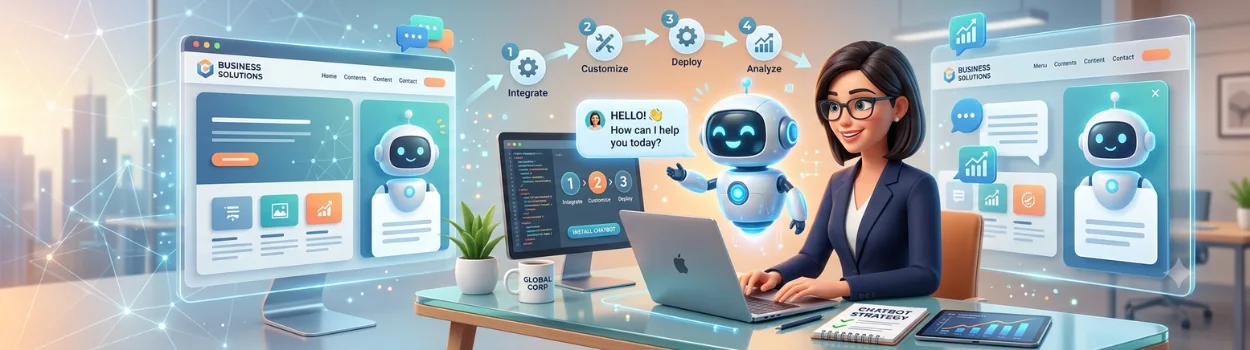
Introduction
Imagine visiting a business website and having a question about pricing, products, or services—but no one is available to respond. Most visitors won’t wait. They’ll simply leave and visit a competitor.
That’s why businesses of every size are now choosing to add Chatbot to Website platforms. Whether you’re a startup, small business, eCommerce store, healthcare provider, educational institute, or service company, an intelligent AI Chatbot can engage visitors instantly, answer common questions, qualify leads, and even schedule appointments—all without human intervention.
Modern chatbots have evolved far beyond simple automated replies. Today’s AI Chatbot solutions understand customer intent, provide personalized recommendations, integrate with CRMs, and support businesses 24/7.
In this complete guide, you’ll learn exactly how to add Chatbot to Website, choose the right chatbot platform, avoid common mistakes, and maximize conversions.
Why Every Business Should Add Chatbot to Website
Today’s customers expect immediate responses. Research consistently shows that delayed replies significantly reduce conversion rates.
When you add Chatbot to Website, your business can:
- Answer customer questions instantly
- Capture leads automatically
- Book meetings or appointments
- Recommend products
- Reduce support workload
- Improve customer satisfaction
- Increase sales opportunities
- Provide 24/7 customer service
Instead of losing potential customers after office hours, your website continues generating business around the clock.

What Is an AI Chatbot?
An AI Chatbot is an intelligent virtual assistant that communicates with website visitors using artificial intelligence and natural language processing (NLP).
Unlike traditional rule-based chatbots that only follow predefined scripts, modern AI-powered chatbots can:
- Understand natural language
- Learn from previous conversations
- Provide contextual answers
- Personalize responses
- Integrate with business systems
- Assist customers through the buying journey
This makes them an excellent choice for businesses aiming to deliver faster, smarter, and more engaging customer experiences.
Benefits of Add Chatbot to Website
Adding a chatbot is more than a customer support upgrade—it’s a business growth strategy.
1. 24/7 Customer Support
Customers can receive instant answers at any time without waiting for business hours.
2. Better Lead Generation
An AI Chatbot collects essential visitor details, including:
- Name
- Email address
- Phone number
- Business requirements
- Budget
- Preferred contact time
This information helps your sales team follow up with qualified prospects.
3. Faster Customer Response
Instead of waiting minutes or hours, customers receive answers in seconds, improving user experience and reducing bounce rates.
4. Increased Website Engagement
Interactive conversations encourage visitors to spend more time exploring your website, which can positively influence engagement metrics.
5. Reduced Support Costs
A chatbot automates repetitive queries, allowing your support team to focus on complex customer issues.
6. Higher Conversion Rates
By guiding visitors toward the right products or services, chatbots help convert more website traffic into paying customers.
Step-by-Step Guide to Add Chatbot to Website
Step 1: Define Your Business Goals
Before choosing a chatbot, determine what you want it to achieve.
Common goals include:
- Lead generation
- Customer support
- Appointment booking
- Product recommendations
- FAQ automation
- Sales assistance
- Order tracking
Having clear objectives ensures you select the right solution.
Step 2: Choose the Right AI Chatbot
Not every chatbot offers the same capabilities.
Look for features such as:
- AI-powered conversations
- Easy website integration
- CRM connectivity
- Live chat handoff
- Multi-language support
- Analytics dashboard
- Mobile responsiveness
- Custom branding
- WhatsApp integration
- Email notifications
Selecting the right platform ensures long-term scalability and better customer experiences.
Step 3: Design Your Chat Flow
Plan how the chatbot will interact with visitors.
Include conversations for:
- Greeting visitors
- Frequently asked questions
- Product inquiries
- Pricing requests
- Appointment scheduling
- Contact collection
- Customer support
- Feedback collection
A logical conversation flow helps users quickly find the information they need.
Step 4: Customize the Chatbot
Personalization builds trust and reinforces your brand identity.
Customize:
- Company logo
- Brand colors
- Welcome message
- Chat icon
- Agent name
- Tone of communication
For example:
- “Hello! 👋 Welcome to our website. How can we help you today?”
A friendly greeting encourages visitors to start a conversation.
Step 5: Add Chatbot to Website
Most chatbot providers offer simple integration options.
Typically, you can:
- Copy the chatbot installation code
- Paste it before the closing tag
- Use a CMS plugin (such as WordPress)
- Integrate through Google Tag Manager
Many platforms require no coding knowledge, making setup quick and accessible for business owners.
Step 6: Test Everything
Before going live, thoroughly test the chatbot.
Check whether it can:
- Answer FAQs accurately
- Capture lead information
- Trigger email notifications
- Transfer chats to human agents
- Work on mobile devices
- Load quickly across browsers
Testing helps eliminate issues before customers encounter them.
Step 7: Monitor Performance
After deployment, track key performance indicators (KPIs), including:
- Total conversations
- Lead conversions
- Response time
- Customer satisfaction
- Bounce rate
- Chat completion rate
- Frequently asked questions
Use these insights to refine chatbot responses and improve overall effectiveness.
Best Features to Look for in an AI Chatbot
When evaluating chatbot solutions, prioritize features that support both customer experience and business growth.
Essential features include:
- AI-driven conversations
- Natural language understanding (NLP)
- Live agent takeover
- CRM integration
- Email automation
- Lead qualification
- Appointment scheduling
- WhatsApp integration
- Analytics and reporting
- Multi-language support
- Mobile optimization
- Workflow automation
- Secure data handling
These capabilities ensure your chatbot can grow alongside your business needs.

Common Mistakes When You Add Chatbot to Website
Avoid these common pitfalls:
- Using overly robotic responses
- Asking for too much information upfront
- Ignoring mobile optimization
- Failing to provide an option to contact a human
- Not updating chatbot knowledge regularly
- Overcomplicating conversation flows
- Forgetting to track chatbot analytics
A well-maintained chatbot delivers better user experiences and stronger business results.
Industries That Benefit Most from an AI Chatbot
Almost every industry can leverage chatbot technology effectively.
Examples include:
- eCommerce
- Healthcare
- Education
- Real Estate
- Manufacturing
- Finance
- Insurance
- Travel
- Hospitality
- Legal Services
- Digital Marketing Agencies
- SaaS Companies
Regardless of your industry, a chatbot can streamline customer interactions and improve operational efficiency.
How an AI Chatbot Improves SEO and User Experience
While chatbots don’t directly influence search rankings, they can positively impact several user engagement signals that search engines value.
Benefits include:
- Increased time on site
- Lower bounce rates
- Faster customer assistance
- Improved user satisfaction
- Better navigation support
- Enhanced lead engagement
Additionally, AI-powered search experiences such as Google AI Overview, ChatGPT, Gemini, and Perplexity prioritize websites that provide helpful, user-focused content and seamless experiences—making chatbots a valuable addition to modern websites.
Frequently Asked Questions (FAQs)
How long does it take to add Chatbot to Website?
Can an AI Chatbot replace human support?
Will a chatbot work on mobile devices?
Can chatbots generate leads?
Is coding required to add Chatbot to Website?
Final Thoughts
Choosing to add Chatbot to Website is one of the smartest investments a business can make to improve customer engagement, automate support, and generate more qualified leads. With the power of a modern AI Chatbot, your website becomes an always-on digital assistant—ready to answer questions, guide visitors, and support your sales process 24/7.
As customer expectations continue to rise, businesses that embrace conversational AI will be better positioned to deliver exceptional experiences and stay ahead of the competition.
If you’re looking for the Best for a Business Website, implementing a reliable AI Chatbot is a practical step toward enhancing customer satisfaction, improving operational efficiency, and driving long-term business growth.

