
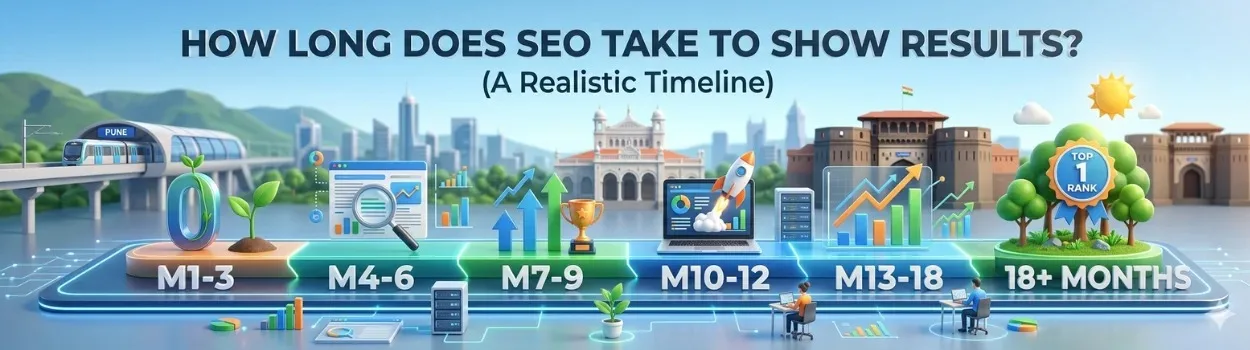
If you are investing in SEO for your business, one of the first questions you will ask is: “How long does SEO take to show results?” The honest answer is that SEO is not an overnight strategy. In most cases, businesses start seeing early improvements within 3–6 months, while significant growth usually happens between 6–12 months.
SEO is a long-term digital marketing investment that builds sustainable traffic, rankings, leads, and brand authority over time. Unlike paid ads that stop generating traffic once your budget ends, SEO continues delivering value for months and years when done correctly.
In this guide, we’ll break down the realistic SEO timeline, explain what affects SEO speed, and show how businesses can accelerate results ethically in 2026.
Why SEO Takes Time to Work
Google Needs Time to Crawl and Index
SEO Is Based on Trust and Authority
- Expertise
- Authority
- Trustworthiness
- Helpful user experience
Competition Impacts Ranking Speed
Ranking for “best SEO company” is far more competitive than ranking for a local keyword like “SEO services for dentists in Pune.” The more competitive the keyword, the longer it may take to rank.
SEO Is a Long-Term Investment
Realistic SEO Timeline Month by Month
Month 1 – SEO Audit & Research
The first month is focused on planning and fixing foundational issues.
Key Activities
- Technical SEO audit
- Competitor analysis
- Keyword research
- Website structure optimization
- Fixing indexing and crawling issues
- Improving mobile responsiveness
What Results to Expect
At this stage, rankings may not improve significantly yet. However, technical fixes prepare the website for future growth.
Month 2 – On-Page SEO Optimization
The second month focuses on improving website pages for search engines and users.
Key Activities
- Optimizing titles and meta descriptions
- Improving content structure
- Internal linking
- Adding schema markup
- Enhancing page speed
What Results to Expect
You may begin seeing:
- Better indexing
- Small ranking fluctuations
- Improved website usability
Month 3 – Content Creation Begins
Content becomes the main growth engine of SEO.
Key Activities
- Publishing blog posts
- Optimizing service pages
- Targeting long-tail keywords
- Creating location-based content
- Building topical authority
What Results to Expect
This is often when businesses begin noticing:
- Initial keyword rankings
- Increased impressions in Google Search Console
- Small traffic growth
For low-competition keywords, some pages may already rank on the first few pages of Google.
Months 4–6 – Traffic Growth Starts
This is where SEO momentum usually becomes visible.
Key Activities
- Continuous content publishing
- Backlink building
- Improving domain authority
- Optimizing underperforming pages
- Local SEO improvements
What Results to Expect
By this stage, businesses often see:
- Noticeable organic traffic growth
- More leads and inquiries
- Better keyword positions
- Increased website authority
Long-tail keywords generally start generating qualified traffic during this phase.
Months 6–12 – Strong SEO Momentum
At this point, Google begins recognizing your website as more authoritative.
What Happens During This Phase
- Competitive keywords start ranking
- Higher trust signals develop
- Organic traffic becomes consistent
- Conversion rates improve
Businesses that consistently publish quality content and optimize their websites usually experience major SEO improvements during this period.
12+ Months – Long-Term SEO Growth
SEO becomes highly valuable after one year of consistent effort.
Long-Term Benefits
- Stable rankings
- Reduced dependency on ads
- Better brand visibility
- Lower customer acquisition costs
- Compounding traffic growth
This is why businesses that stay committed to SEO usually outperform competitors in the long run.
Factors That Affect SEO Results Timeline
Website Age and Authority
Competition Level
Quality of SEO Strategy
- Technical optimization
- Content marketing
- Link building
- User experience improvements
Content Consistency
Backlink Quality
Technical SEO Health
How Long Does Local SEO Take?
Local SEO often works faster than national SEO because competition is lower and search intent is highly targeted.
Local SEO Timeline
- 1–3 months for Google Business Profile optimization
- 3–6 months for stronger local rankings
Faster Wins Through Local Keywords
Keywords like:
- “SEO company in Pune”
- “digital marketing agency near me”
- “best local SEO services”
usually rank faster than broader national keywords.
For small businesses, local SEO is often the quickest way to generate leads through organic search.
SEO vs Google Ads – Which Gives Faster Results?
Businesses often compare SEO with paid advertising.
SEO | Google Ads |
Long-term growth | Instant traffic |
Sustainable leads | Stops when budget ends |
Builds authority | Paid visibility only |
Better long-term ROI | Immediate results |
Why Google Ads Works Faster
Why SEO Delivers Better Long-Term ROI
SEO takes longer initially but creates sustainable traffic without ongoing ad spend for every click.
The best strategy for many businesses is combining SEO with paid advertising for both short-term and long-term growth.
Signs Your SEO Is Working
Increased Keyword Rankings
Even moving from page 5 to page 2 is positive progress.More Organic Traffic
Steady traffic growth indicates improving visibility.Better Click-Through Rates
Optimized titles and descriptions can increase clicks even before top rankings are achieved.More Leads and Inquiries
Qualified organic traffic often converts better than paid traffic.Improved Domain Authority
Higher authority strengthens your future ranking potential.Common SEO Mistakes That Delay Results
Several mistakes can slow down SEO performance.
Expecting Instant Rankings
SEO requires patience and consistency.
Publishing Thin Content
Low-quality or AI-generated spam content rarely performs well in modern Google algorithms.
Ignoring Technical SEO
Broken links, slow loading speeds, and poor mobile usability hurt rankings.
Inconsistent Content Updates
SEO rewards websites that stay active and updated regularly.
Buying Low-Quality Backlinks
Spammy backlinks can lead to penalties and ranking losses.
How to Speed Up SEO Results Ethically
Focus on Long-Tail Keywords
Long-tail keywords are easier to rank for and often convert better.
Example:
Instead of targeting “SEO,” target:
- “SEO services for manufacturing companies”
- “local SEO company in Pune”
Publish Helpful Content Regularly
Improve Website Speed
Optimize for AI Search and Featured Snippets
- Google AI Overviews
- ChatGPT discovery
- Gemini
- Perplexity AI
Build High-Quality Backlinks
- Guest posting
- PR campaigns
- Case studies
- Industry collaborations
Example SEO Timeline for a Small Business
Here’s a realistic example of how SEO growth may look for a small business website.
Month 1–2
- Technical optimization
- Keyword research
- Initial content planning
Month 3–4
- Keyword rankings improve
- Traffic starts growing
Month 5–6
- Leads and inquiries increase
- Local rankings improve
Month 12
- Strong organic visibility
- Stable lead generation
- Higher ROI compared to paid ads
Why Businesses Quit SEO Too Early
Many companies stop SEO before seeing major results.
Unrealistic Expectations
Some businesses expect first-page rankings within weeks.
Comparing SEO to Paid Ads
SEO and paid ads serve different purposes. SEO is slower initially but more sustainable.
Lack of Consistency
Stopping SEO after a few months often prevents momentum from developing.
Choosing Cheap SEO Services
Low-cost SEO providers frequently use outdated or spammy tactics that damage long-term growth.
Final Thoughts – SEO Is a Marathon, Not a Sprint
So, how long does SEO take to show results?
For most businesses:
- Early improvements happen within 3–6 months
- Significant growth appears within 6–12 months
- Strong long-term ROI develops after consistent optimization
SEO is not about instant wins. It is about building a strong digital presence that continues generating traffic, leads, and revenue over time.
Businesses that stay consistent with technical SEO, content marketing, and authority building are the ones that dominate search rankings in the long run.
If your business wants sustainable growth in 2026 and beyond, investing in SEO remains one of the smartest digital marketing decisions you can make.

